
The ‘Korean Wave’ Washes on Japan’s (and the Rest of Asia’s) Shores: An Evening of Conversation

April 11, 2005
The ‘Korean Wave’ Washes on Japan’s (and the Rest of Asia’s) Shores: An Evening of Conversation
403 Kent Hall, Columbia University (116th St. and Amsterdam Ave.)
6:00 PM – 8 PM 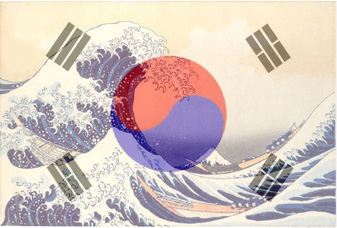
In Japan they call it the ‘Korean Boom’ (Kanryuu Buumu). In the English-speaking world it has become known as the ‘Korean Wave.’ What is it that makes (South) Korean culture so hot (or cool) in Asia and around the world today? How is this trend being perceived in Korea, Japan, China, and elsewhere? What does the phenomenon signify within the broader historical context of Japanese-Korean relations, in which cultural exchange has at times functioned as a wellspring of civilization and at time as an instrument of colonial oppression? Join us for an evening of conversation on these and other timely issues with distinguished East Asia scholars from Columbia and neighboring institutions.
Barbara Brooks (Associate Professor of Modern East Asian History, CUNY)
Jahyun Haboush (Professor of Korean History and Literature, Columbia)
Ted Hughes (Assistant Professor of Korean Literature, Columbia)
Dorothy Ko (Professor of Chinese History, Barnard)
Max Moerman (Assistant Professor of Japanese Religion, Barnard)
Richard Peña (Associate Professor of Film, Columbia)
Greg Pflugfelder (Associate Professor of Japanese History, Columbia)
Janet Poole (Assistant Professor of Korean Literature, NYU)
Henry Smith (Professor of Japanese History, Columbia


