
2002 Soshitsu Sen XV Distinguished Lecture on Japanese Culture: Tradition and Creative Power in Theatre

April 30, 2002
2002 Soshitsu Sen XV Distinguished Lecture on Japanese Culture: Tradition and Creative Power in Theatre
Tadashi Suzuki (World-renowned Experimental Theater Director)
Low Rotunda, Low Memorial Library, Columbia University (116th Street between Broadway and Amsterdam Avenues)
6:00 PM
Lecture to be given in Japanese with English translation
Reception to follow (Faculty Room of Low Memorial Library)
RSVP REQUIRED
PLEASE E-MAIL the Donald Keene Center at donald-keene-center@columbia.edu or call 212-854-5036 by April 22nd
|
|
SUZUKI Tadashi (Theater Director)
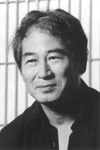 Tadashi Suzuki is the Founder and Director of the Suzuki Company of Toga (SCOT), Chairman of the Japan Performing Arts Foundation (JPAF), Artistic Director of the Shizuoka Performing Arts Center (SPAC), and the creator of the Suzuki Method of Actor Training. He organized the Toga Festival (Japan’s first international theater festival) from 1982 through 1999 and formed the International Committee of the Theatre Olympics in 1993 together with Robert Wilson, Yuri Lyubimov, Heiner Müller, Wole Soyinka, and other theater artists from around the world.
His works include “On the Dramatic Passions,” “The Trojan Women,” “Cyrano de Bergerac” and the opera “Vision of Lear.” Through the Toga Festival and the 2nd Theatre Olympics in Shizuoka, Suzuki has introduced a wide range of the world’s foremost theater artists to Japanese audiences.
Not only one of the world’s leading theater directors, Suzuki is also an important performance theorist. The Suzuki Method is a system of exercises designed to be a realization of his philosophy, the cornerstone of which is a belief that human beings possess the ability to tap into the expressive power of “animal energy,” and that theater, as a context for this expression, is socially and spiritually crucial in today’s global world. Suzuki has articulated his theories in a number of books. A collection of his writings in English, The Way of Acting, is published by the Theatre Communications Group.
Suzuki’s concerns include the structure of the theater group, the creation and use of theatrical space, and the overcoming of cultural and national barriers in the interest of creating work with a universal basis. He has been engaged in a long-term collaborative relationship with celebrated architect Arata Isozaki, working with him very closely in the creation of eight theaters in Japan. The result is buildings that not only combine the theatrical arts with architecture, but also reach a level of independence as highly acclaimed modern art forms.
Suzuki’s activities reflect a forceful approach to dealing with many of the fundamental issues of our times, both in his role as a director creating multilingual and multicultural productions and as a festival producer bringing people from throughout the world together in the context of shared theatrical endeavors.
Suzuki has been described by U.S. theater critics as a “master of theater” (Boston Globe), “a surprising artist, full of daring schemes and disturbing notions” (Christian Science Monitor), and “an innovator” (Village Voice) who blends Noh and Kabuki traditions with modern and Western elements “with complete coherence, and thrillingly” (Financial Times).
During his two-week stay as a Visiting Fellow of the Donald Keene Center in April-May 2002, Mr. Suzuki conducted a variety of activities, including lectures, Q&A sessions, and technical demonstrations, at Columbia University, New York University, Yale University, and the University of Connecticut. At Columbia, he gave the Sen Lecture (“Tradition and Creative Power in Theater”) and engaged in a Q&A session for theater students and other individuals interested in theater. He also was the focal point of a panel discussion on cross-cultural influences in theater with such distinguished theater professionals as New York Times drama critic Mel Gussow, set designer Ming Cho Lee, and Theatre Communications Group Executive Director Ben Cameron.


