
A Thousand Years of Picture-Storytelling Comes to New York
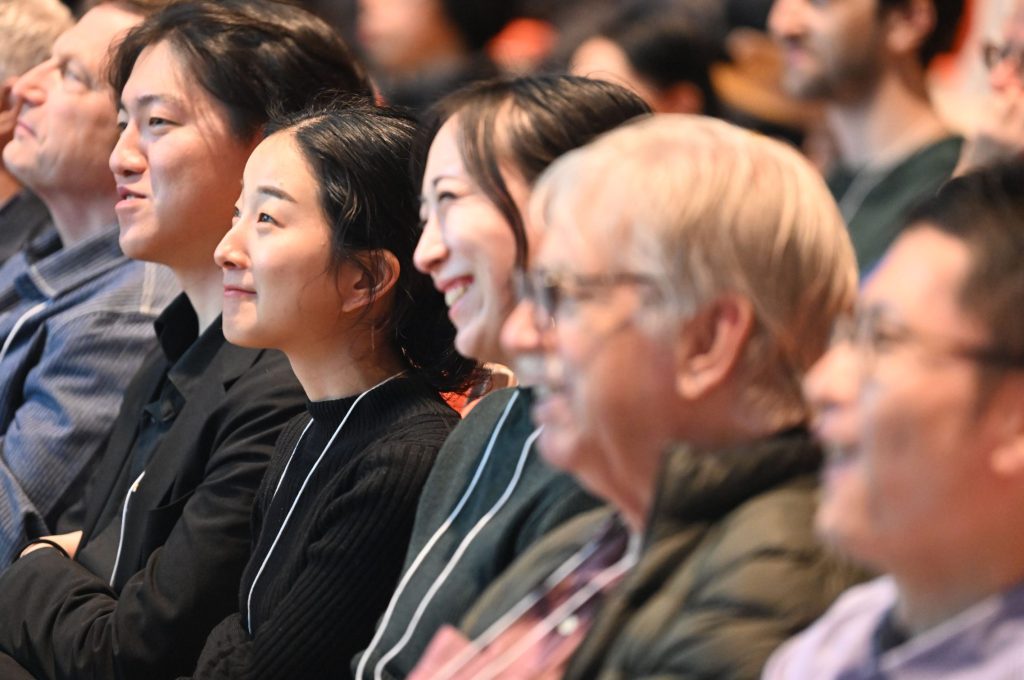
One of Japan’s oldest and most visually immersive storytelling traditions took center stage at Columbia University. On March 11, 2025, three master practitioners of etoki — the art of narrating stories to painted scrolls— gathered at The Forum to bring the life of Prince Shōtoku to a New York audience. The event, part of the Sōshitsu Sen XV Distinguished Lecture on Japanese Culture, was organized by Haruo Shirane (Columbia University) and presented by the Donald Keene Center of Japanese Culture.
Etoki, which translates roughly as “picture-explaining” or “picture-storytelling,” is a practice with roots stretching back over a millennium. Performers use a long pointer to guide listeners through illustrated scrolls, weaving together teachings, narrative, and dramatic performance. Its arrival in New York City marked a significant moment of cultural transmission.
Prince Shо̄toku: Japan’s Buddhist Founding Father
At the heart of the evening was Prince Shōtoku (574–622 CE), revered in Japan as the legendary founder of Buddhism. According to tradition, when Shōtoku was just sixteen years old, he climbed Mount Shigi and prayed to the Four Heavenly Kings (Shitennō) for victory against Mononobe no Moriya. His prayer was answered, and from that triumph grew some of Japan’s most enduring institutions. Shōtoku founded Shitennōji Temple in 593 CE — one of Japan’s oldest Buddhist temples, still standing in Osaka today — and equipped it not only with a hall of worship but with a hospital and facilities for social welfare, making it a center of compassionate civic life.
In 604 CE, he promulgated the Seventeen-Article Constitution, Japan’s first governing law. Its opening article declared that harmony (wa) is to be valued above all. The spirit of this document — inclusive, conciliatory, ethically grounded — is why Shōtoku continues to be called “the Holy Sovereign of the Land of Harmony.”
Etoki, which translates roughly as “picture-explaining” or “picture-storytelling,” is a practice with roots stretching back over a millennium.
Fourteen hanging scrolls depicting scenes from the prince’s illustrated biography were displayed at the venue, giving audiences an intimate encounter with the visual tradition before the performances began.
Abe Yasurō, Professor at Ryukoku University and Guest Lecturer at Nagoya University, with the hanging scrolls of the Illustrated Biography of Prince Shōtoku (photo by Eileen Barroso)
Three Masters, Three Styles
The evening featured three etoki performers, each representing a distinct lineage and approach.
Yamaoka Bumyō, Head Deacon of Shitennōji Temple and Head Priest of Aizendō Shōmanin Temple, performed the oldest strand. The etoki of Shitennōji’s Picture Hall traces its origins to the eighth century, when illustrations were first used to preach the Prince’s story. Today, this performance takes place on the 22nd of every month at the temple, using wall paintings created by artist Kenkichi Sugimoto after the hall’s reconstruction in 1983. Yamaoka narrated key episodes — from the infant Shōtoku pressing his hands in prayer at the age of two, to his construction of Shitennōji and his role as regent.
Masuda Eishin, affiliated with the Jōdo School and a member of the Mikawa Super Etoki Association, offered what he calls “super-etoki” — a form that incorporates new media and a performance technique he terms narikiri etoki, in which the performer fully embodies each character in the story. His piece, whimsically titled “The King of the Buddhist Law and of the Imperial Law: Prince Shōtoku and His Friends in New York City,” imagined the prince himself speaking to the New York audience, articulating his vision of a Japan shaped by the spirit of harmony.
Nagino Akihito, Chief Priest of Honchōji Temple and second-generation leader of the Mikawa Super Etoki Association, performed a biwa storytelling piece — combining the traditional Japanese lute with chanted preaching (fushidan sekkyo). His piece focused on the Moriya Battle, opening with the celebrated passage from The Tale of Heike about the bells of Gion Monastery before tracing the arc of Shōtoku’s conflict with Moriya and his decision not to destroy the defeated clan but to integrate them into Shitennōji. In this act of mercy, Nagino suggested, lies the spirit of harmony — a Buddhism that makes no distinction between friend and enemy.
The Sо̄shitsu Sen XV Distinguished Lecture
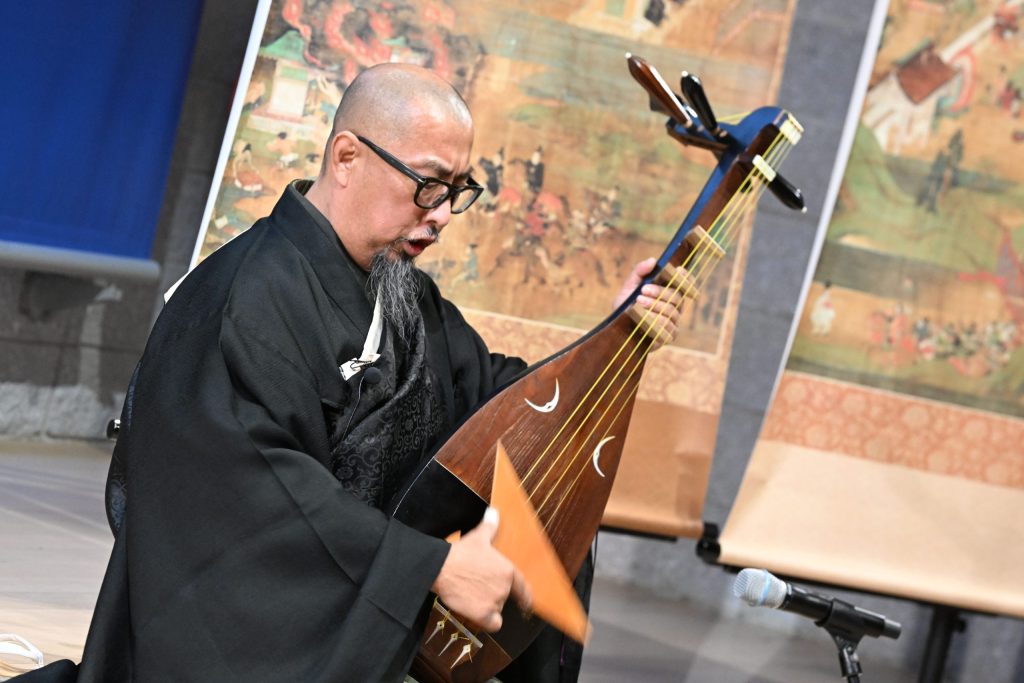
Chief Priest of Honchōji Temple, Nagino Akihito, on the biwa (photo by Eileen Barroso)
A Living Tradition
Introductory remarks by Abe Mika of Nagoya University explored the question “What is etoki?” while Abe Yasurō of Ryukoku University discussed the illustrated biography of Honshōji Temple. Yamamoto Satomi of Waseda University explored the relationship of oral storytelling to medieval Buddhist art.
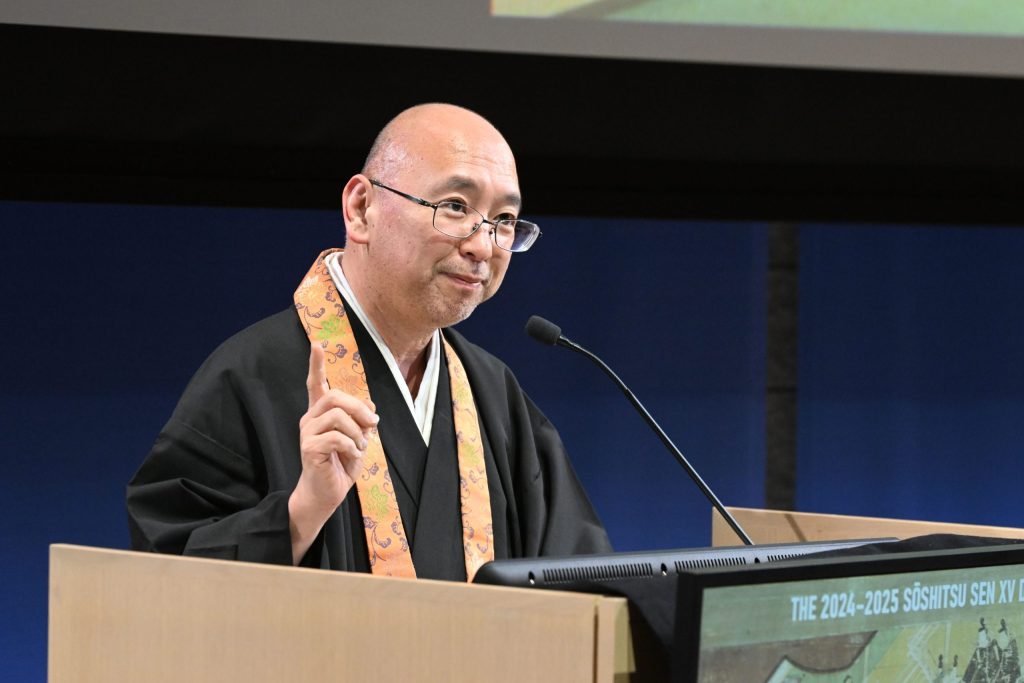
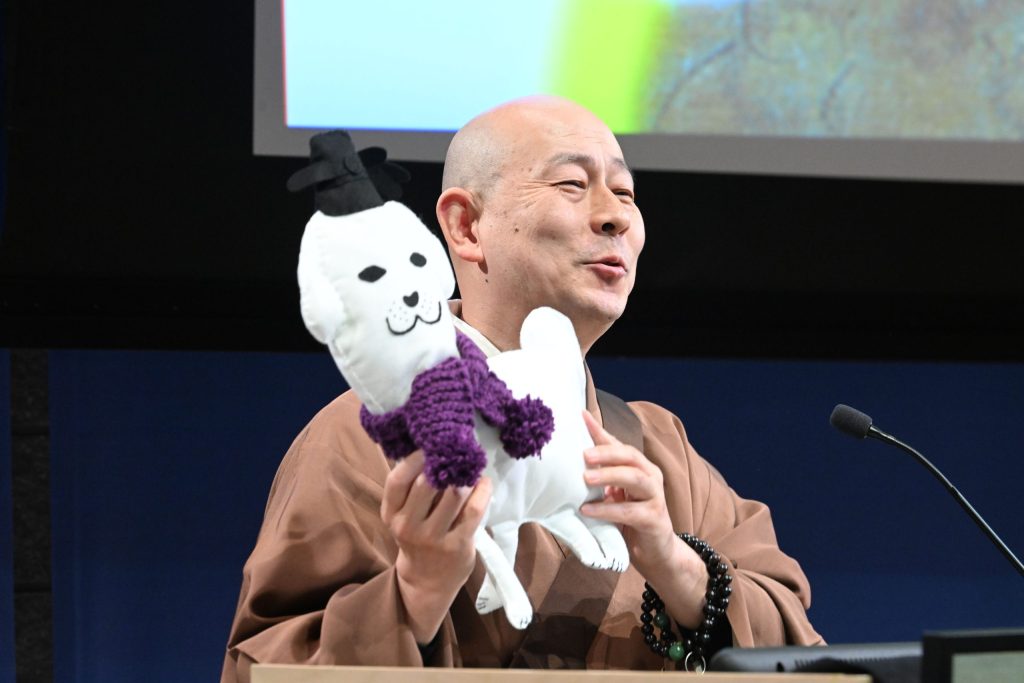
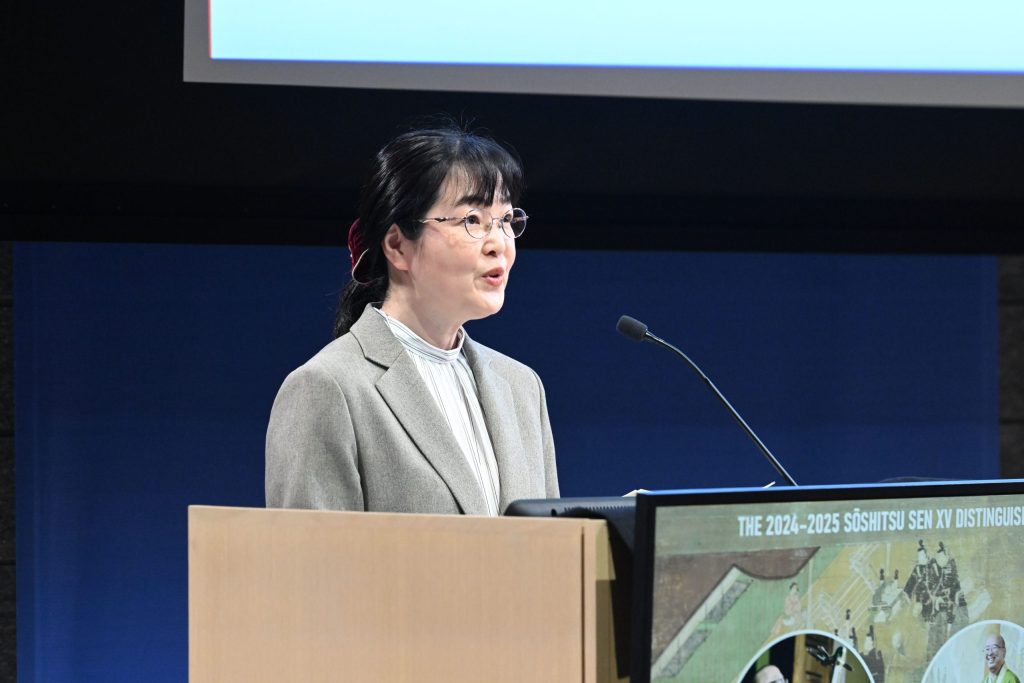
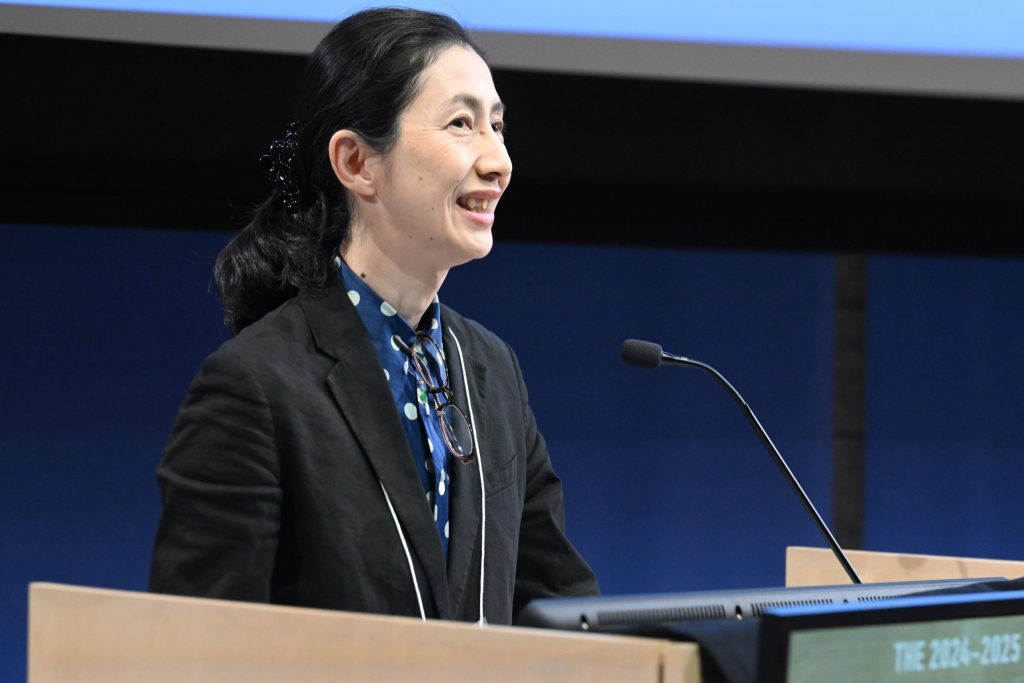
(From left to right) Yamaoka Bumyō, Head Deacon of Shitennōji Temple; Masuda Eishin, Temple Guardian of Midasandō, Jōdo School; Abe Mika, Research Fellow at Nagoya University Research Center for Cultural Heritage and Texts; and Yamamoto Satomi, Professor at Waseda University (photos by Eileen Barroso)
The Sōshitsu Sen XV Distinguished Lecture, established in 1988 through an endowment from the Urasenke Foundation of Kyoto, has brought figures such as composer Takemitsu Tōru, novelist Shiba Ryōtarō, architect Ban Shigeru, and comedian Watanabe Naomi to Columbia’s stage.
Illustrated Pamphlet and Supplementary Reading Materials for Hanging Scrolls (downloadable links below)
Videos from March 11, 2025
① Introductory remarks by Professor Haruo Shirane, Director of the Donald Keene Center of Japanese Culture.
② Abe Mika, Research Fellow at Nagoya University Research Center for Cultural Heritage and Texts, presenting the Mount Fuji Etoki.
③ Abe Yasurō, Professor at Ryukoku University and Guest Lecturer at Nagoya University
④ Yamaoka Bumyō, Head Deacon of Shitennōji Temple
⑤ Masuda Eishin, Temple Guardian of Midasandō, Jōdo School
⑥ Performance by Chief Priest of Honchōji Temple, Nagino Akihito
⑦ Yamamoto Satomi, Professor at Waseda University, Faculty of Letters, Arts and Sciences
⑧ Encore Performance: Heike Biwa “Atsumori” — Chief Priest of Honchōji Temple, Nagino Akihito
