
Educating ‘Osan’: Shunga (Erotic) Parodies of 18th-century Women’s Moral Textbooks

April 5th, 2007
Educating ‘Osan’: Shunga (Erotic) Parodies of 18th-century Women’s Moral Textbooks
Andrew Gerstle (School of Oriental and African Studies, University of London)
403 Kent Hall, Columbia University (116th St. and Amsterdam Ave.)
6:00 – 7:30 PM
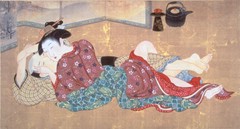 Beginning around 1700, publishers in Kyoto and Osaka began to issue popular, illustrated textbooks for women’s education in considerable numbers. The most famous was Onna daigaku takara-bako 『女大学宝箱』(The Treasure Chest of Great Learning for Women, 1716), a best seller that was reprinted many times into the Meiji era. In the 1750s an Osaka publisher produced a shunga parody Onna dairaku takara-beki 『女大楽宝開』 (Great Pleasures for Women and Their Treasure Boxes). This was the first of many parodies produced by the artist Tsukioka Settei (1726-86) and others. Although these erotic parody books have been known about in scholarly and artistic circles over the centuries, they have been almost entirely neglected from Meiji until recently due to censorship and taboos about shunga. This talk will argue that these shunga parodies were radical and subversive texts on sexuality in Japan that explicitly asserted women’s right to pleasure.

