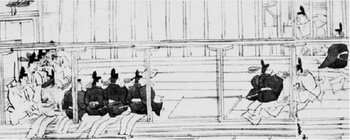
What Did a Regent Do? Regent FUJIWARA Tadahira in the 930s

February 23, 2006
What Did a Regent Do? Regent FUJIWARA Tadahira in the 930s
Joan Piggott (Gordon L. Macdonald Professor of History, University of Southern California)
403 Kent Hall, Columbia University (116th St. and Amsterdam Ave.)
6:00 PM – 7:30 PM
What did a regent do at the Heian court from the later ninth through the later eleventh centuries? In the English historiography, the regent has generally been portrayed as an autocrat whose paramount power was rooted in “marriage politics”—his control over a child monarch through the monarch’s mother, in a society where uxorilocality was customary—and buttressed by his martial Minamoto “claws and fangs.” As for how a regent ruled, we find mention of the idea of “household government” (mandokoro seijiron), suggesting that the regent’s household chancellery itself ruled the tennô‘s realm in patrimonial fashion. While this idea has been rejected by experts in Japan, there is a lively debate among specialists as to how regents actually led court and realm from the later ninth through the early eleventh centuries, and the resulting shape of the monarchy and polity of their era.
As a historian keenly interested in the course of monarchy and state formation in Japan—Professor Piggott is presently writing a monograph entitled On Beyond Shômu concerning those very issues—she was initially drawn to the journal of FUJIWARA Tadahira (880-949), the Teishinkôki, in search of evidence concerning the operation and character of the early regency as it was being routinized during Tadahira’s day. In this presentation, she focuses primarily on how Tadahira exercised his regental prerogatives and his relationship with other court officials, including the monarch. As will become clear, Tadahira was much less an autocrat than a chief executive who managed a team of courtier-officials and colleague-rulers, including the retired tennô, members of the Council of State, and relatives from his own family who served both inside and outside of the child tennô‘s residential palace. Under the regency of Tadahira, tennô-centered government and its ritsuryô process continued, but there were nonetheless adaptations in and challenges to both hallmarks of the earlier charter era.